
Skip to content
TodoTrail
How it worksLive demoPricingBlog
Sign inCreate my first route
Menu
How it worksLive demoPricingBlogSign in
  1. Home
  2. Planning guides
  3. Daily planning method

Daily planning method

Plan the day before it starts pulling at you

A calm daily plan is a decision made in advance: what matters today, what comes first, and where you will restart after an interruption.

Create my first route See a sample route
  • Choose a short list
  • Put tasks in a useful order
  • Close the day with a clean handoff

Best for: A practical five-minute method for deciding what matters and what comes first.

Good to know: This guide teaches the method; the app page shows the product experience.
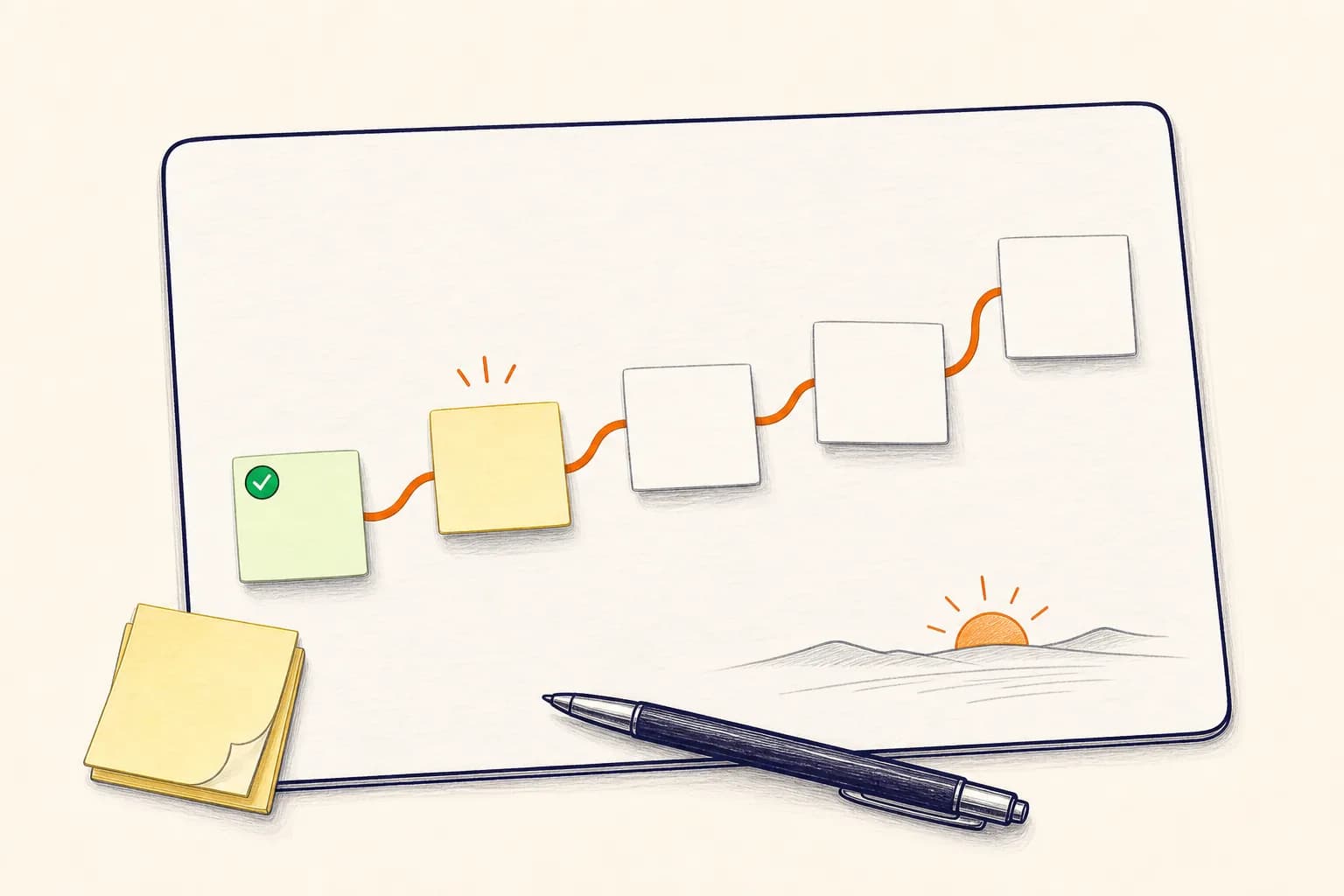
A simple hand-drawn daily planner with blank notes following a clear orange route
A beginning, a current step, and a finish you can see.

A five-minute practice

Make the important decisions before the day gets loud.

TodoTrail
Daily plannerTime blockingWeekly plannerOrganization appsVisual todo listTask routesComparePricingBlogFeedbackPrivacyTermsSecurity

Daily planning works when it reduces future choices. Choose a small set of actions, decide their order, and leave enough space for the day to remain human.

How it works

From open loop to clear route

01

Start with one result

Name what would make today useful. A concrete result gives the rest of the route a reason to exist.

02

Write the next physical actions

Use verbs you can begin: review the brief, draft the opening, send the confirmation. Vague tasks create vague starts.

03

Arrange and begin

Put the actions in order, mark the first note current, and stop planning. The route can change after the work teaches you something.

Built for the real day

What belongs in a daily plan

The route is not a complete inventory of your responsibilities. It is a working map for the part of life that needs to move today.

01

One meaningful outcome

Use it as the test for every task you are tempted to add. Does this move the result or protect the day around it?

02

A realistic first action

The first note should be small enough to start without another planning session.

03

Necessary transitions

Preparation, travel, setup, and follow-up deserve a place when they consume real attention.

04

A stopping point

Know what 'enough for today' looks like so the route does not expand until the evening disappears.

A good fit for

Plans that need to move, not pose

At the start of work

Turn an open-ended workload into a route you can enter immediately.

After priorities change

Rebuild only the affected part of the route instead of abandoning the day.

Before closing

Review the completed path and prepare one clean starting action for tomorrow.

Route principle

The plan is allowed to change.

Its job is to give the day direction, not to prove that the morning version of you predicted everything.

Practical questions

Before you put the day on a route

How long should daily planning take?

Five to ten minutes is usually enough. If planning takes longer than the first task, the system is probably carrying too much detail.

How many tasks should I plan each day?

Choose a few meaningful actions and include the transitions they require. The right number is the one that leaves room for reality.

What should I do with unfinished tasks?

Review them instead of copying them automatically. Keep what still matters, rewrite the next action, and let the rest return to the backlog.

Keep exploring

Choose the planning view that fits

Daily planner appA daily planner app that shows the way forwardDaily schedule plannerPlan the work between the appointmentsWeekly planner appPlan the week one clear day at a time

Start with today

Turn the next few tasks into a route.

No new system to maintain. Just a clearer way to begin.

Create my first route