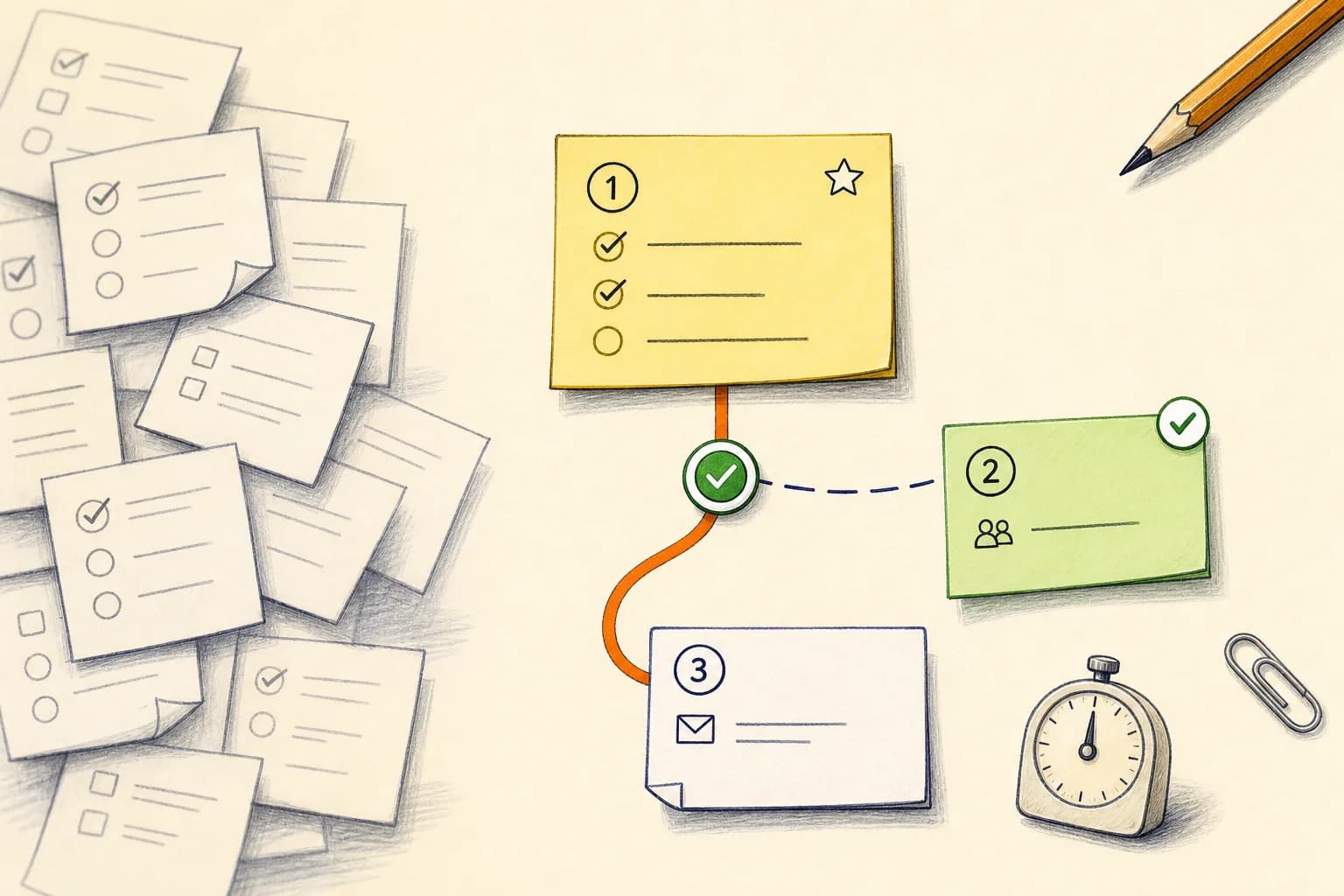
A visible current step reduces the number of unfinished decisions competing for your attention.
A long list keeps asking for attention
Every visible unfinished item quietly asks whether it should be chosen next. Even when you stay on one task, the list keeps presenting alternatives. That repeated evaluation can make focused work feel less settled than it needs to be.
Sequence removes a recurring choice
A route asks you to decide the order before the work begins. Once the current task is complete, the next action is already nearby. You can still change the plan, but you no longer need to rank the whole list at every transition.
One current step gives attention a boundary
Marking one note as current distinguishes the work in hand from what is merely upcoming. The later steps stay visible enough to create confidence, while their status makes it clear that they do not require action yet.
A visible route improves recovery
Meetings, messages, and unexpected requests will still interrupt the day. When you return, the current note and surrounding sequence show where you stopped. Recovery becomes a glance instead of a reconstruction.
Keep the route shorter than the backlog
The advantage disappears if the canvas carries every possible responsibility. Use the route for the work that can realistically move today. Keep long-term capture elsewhere, and bring tasks across only when they earn a place in the daily sequence.