
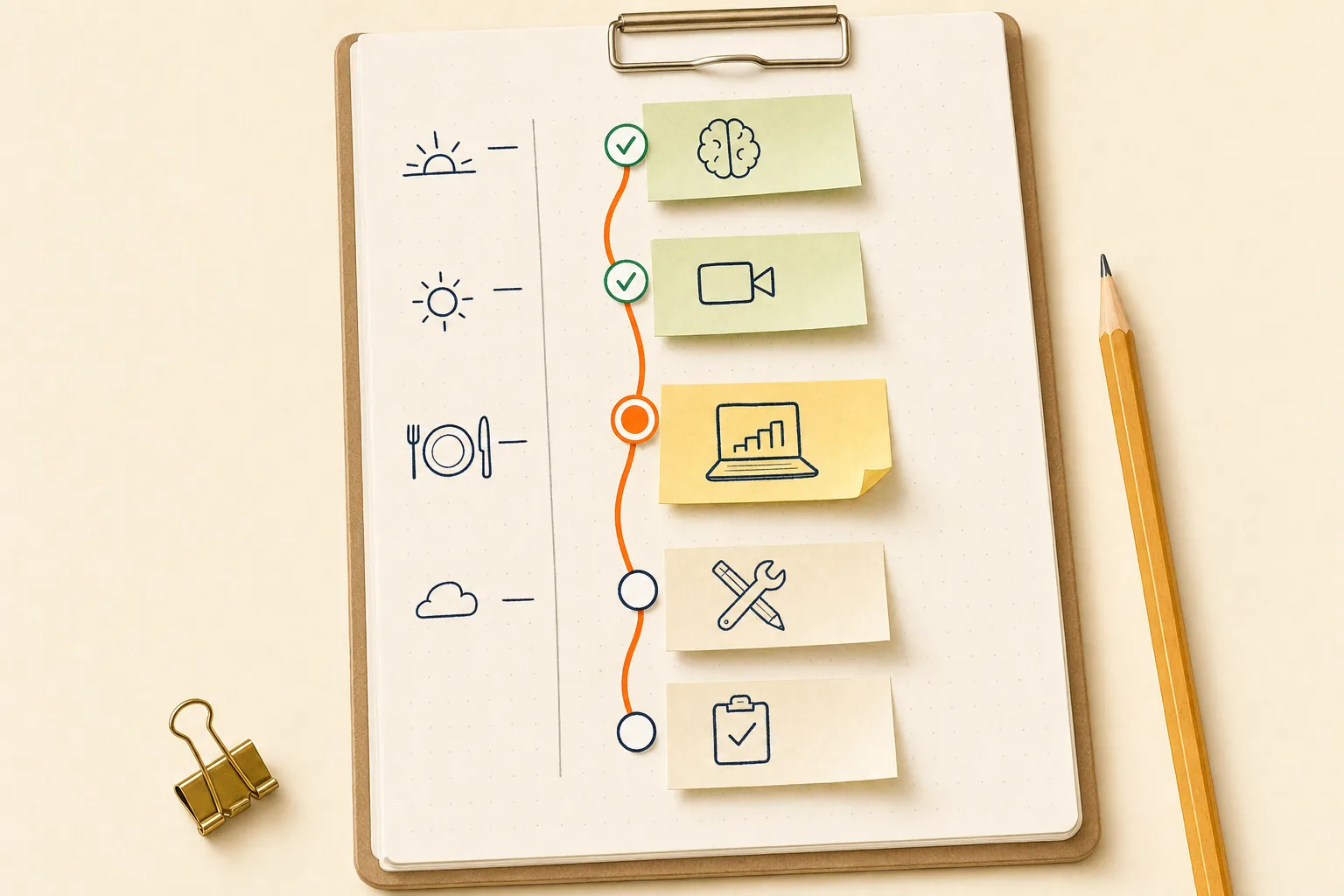
Build a day that respects energy, sequence, transitions, and the time work actually takes.
Choose one result for the day
Name the outcome that would make the day useful even if smaller tasks remain. Put the actions that produce it near the start of the route, when your attention is most available and the day has had fewer chances to drift.
Protect one focused window
Reserve a realistic stretch for the work that needs sustained thought. Keep the exact time in your calendar if useful, then map the actions inside that window as a short route with a clear finish.
Add transitions, not just tasks
Preparation and follow-up are real work. Give opening files, reviewing context, recording decisions, and sending the handoff their own place when they consume attention. Hidden transitions are where optimistic plans often break.
Leave room for reality
Do not pack the route edge to edge. Meetings run over, energy changes, and urgent requests appear. A visible gap is not wasted time; it is what lets the important work survive an imperfect day.
Close the route deliberately
Review what finished, what changed, and what no longer matters. If work continues tomorrow, leave one precise starting action. A focused day ends more calmly when the next day does not inherit a pile of unexplained leftovers.