Skip to content
TodoTrail
How it worksLive demoPricingBlog
Sign inCreate my first route
Menu
How it worksLive demoPricingBlogSign in
  1. Home
  2. Planning guides
  3. Time blocking planner

Time blocking planner

Build a time-blocking plan you can follow

Plan less around an ideal day and more around the next useful block of work. Each route stays small, visible, and easy to adjust.

Create my first route See a sample route
  • Outcome-first planning
  • Short, realistic routes
  • Clear stopping points

Best for: Learning an outcome-first method for building realistic focus blocks.

Good to know: Use a calendar or timer for exact start and stop times.
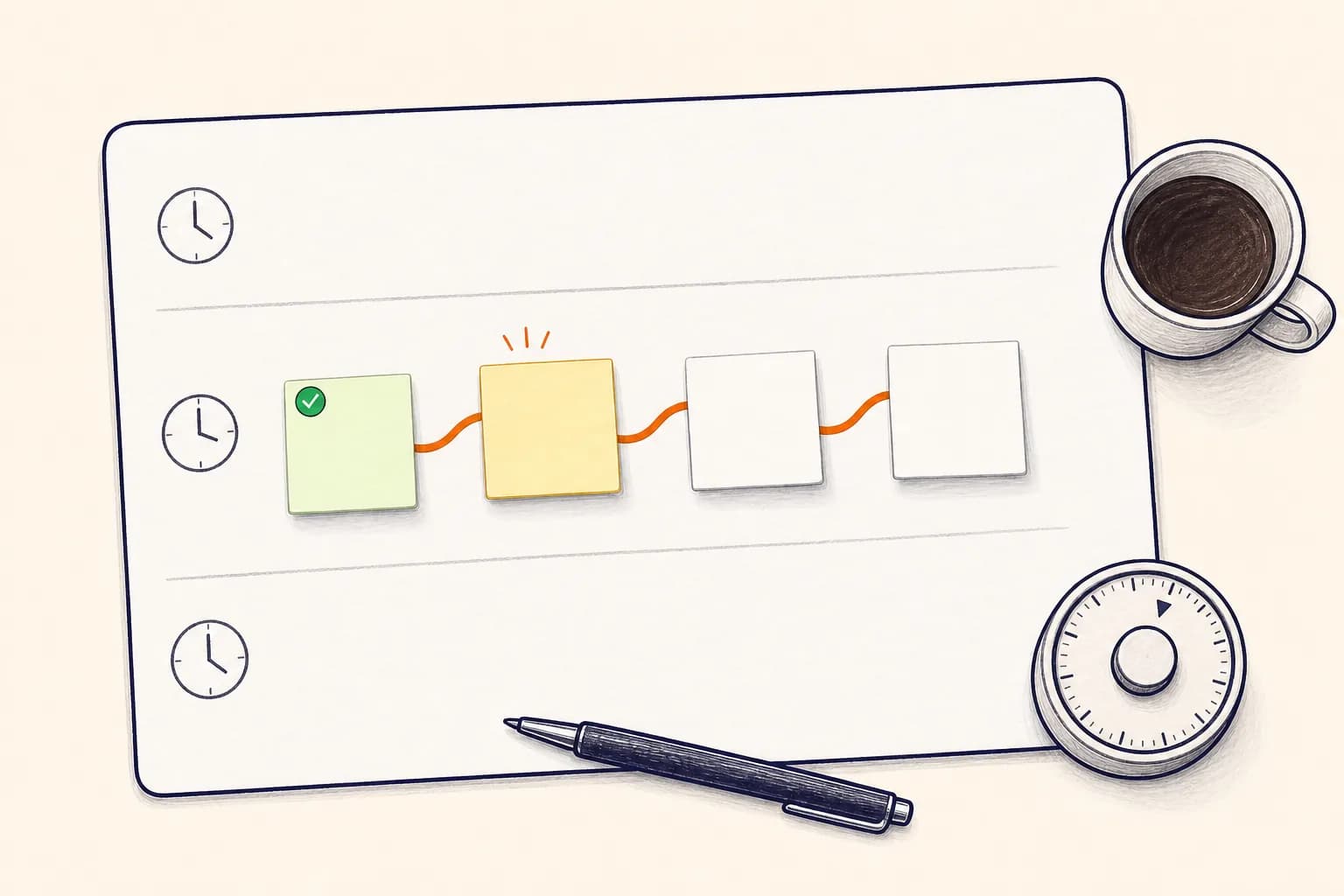
A paper time blocking planner with one highlighted route of blank task notes and a simple timer
A practical plan for the work inside the block.

A workable method

Start with what the block must move.

The best time-blocking plan is not the one with the most perfect grid. It is the one that turns available attention into visible progress. Begin with an outcome, then map only the actions needed to reach it.

TodoTrail
Daily plannerTime blockingWeekly plannerOrganization appsVisual todo listTask routesComparePricingBlogFeedbackPrivacyTermsSecurity

How it works

From open loop to clear route

01

Choose one result

Give the block a finish you can recognize. Replace vague labels like 'project work' with a concrete result.

02

Estimate the route, not the fantasy

Include setup, transitions, and review. A realistic three-step route is more useful than eight tasks that never had room.

03

Leave the next start clean

End by marking what was completed and naming the next action. Tomorrow should not begin with detective work.

Built for the real day

A simple time-blocking routine

Use TodoTrail before, during, and after a focus block. The same route carries the plan, the current state, and the handoff.

01

Before the block

Choose the outcome and arrange the smallest useful sequence of tasks.

02

During the block

Keep one note current and let the route hold the rest of the decisions.

03

When the plan changes

Move or rewrite the affected note without throwing away the entire session plan.

04

At the stopping point

Review the completed path and leave one precise action ready for the next block.

A good fit for

Plans that need to move, not pose

One-hour focus blocks

Use a compact route for a meaningful piece of writing, analysis, or production.

Project sprints

Give a short sprint a visible beginning, build sequence, and review step.

Recovery blocks

Batch the small tasks that accumulated during a busy week without letting them scatter.

Route principle

Do not fill the block edge to edge.

Leave room for setup, interruptions, and a clean finish. A plan with breathing room is easier to trust.

Practical questions

Before you put the day on a route

What is the difference between time blocking and timeboxing?

Time blocking reserves part of the day for a type of work. Timeboxing adds a firm stopping point. TodoTrail can map the task sequence inside either approach.

Should every task have its own block?

Not necessarily. Related actions often work better as one route inside a broader focus block.

What happens when a block runs out?

Keep the current note visible, mark what finished, and decide whether the remaining route should move, shrink, or stop.

Keep exploring

Choose the planning view that fits

Time blocking appGive every focus block a clear routeDaily planning methodPlan the day before it starts pulling at youDaily schedule plannerPlan the work between the appointments

Start with today

Turn the next few tasks into a route.

No new system to maintain. Just a clearer way to begin.

Create my first route