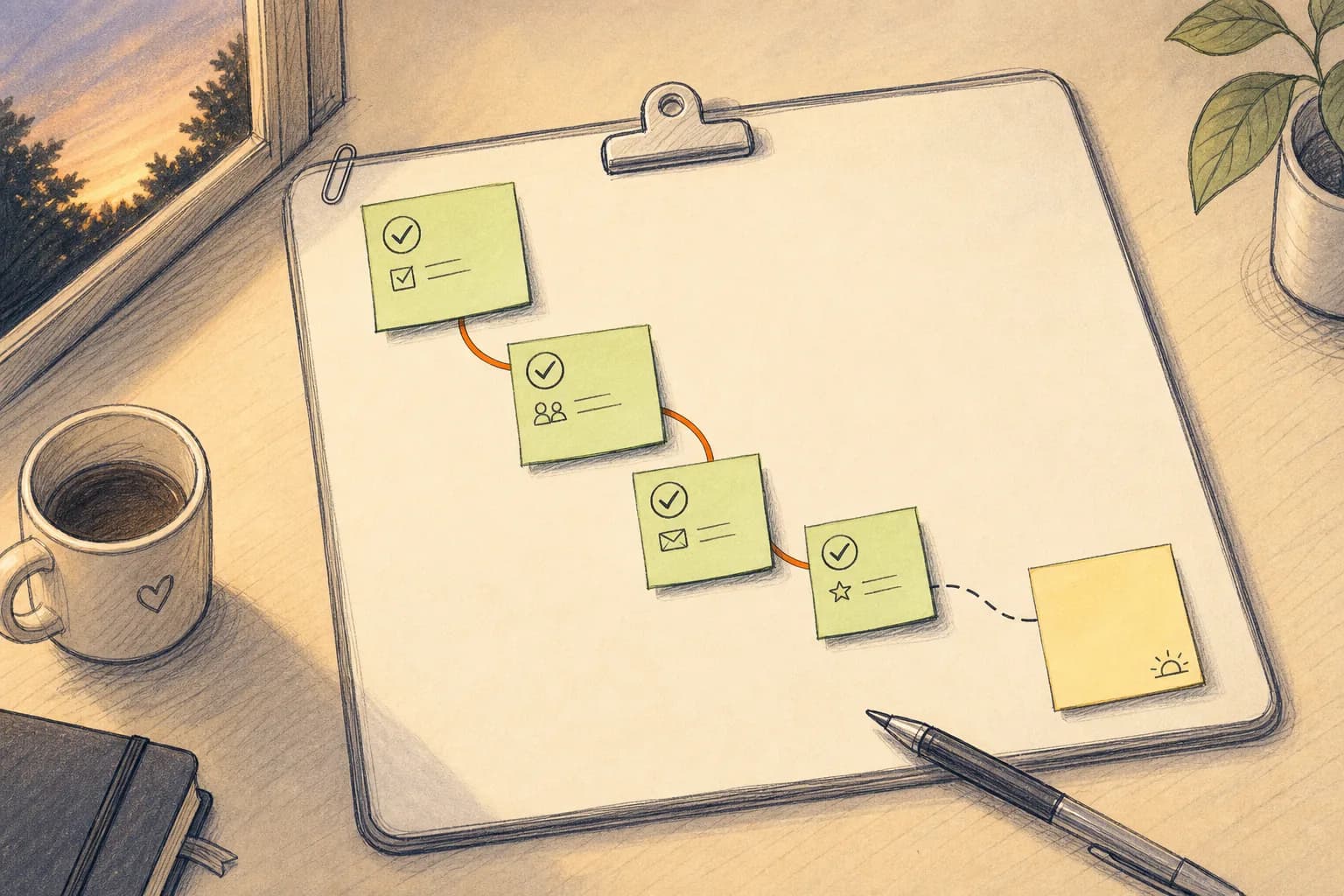
Review what moved, release what no longer matters, and prepare a clean place to begin tomorrow.
Stop adding before you review
Choose a clear stopping point and give yourself five quiet minutes. The review is not another chance to squeeze in a task. Its job is to turn the day's unfinished edges into a deliberate handoff.
Notice what actually moved
Look at completed notes and name the result each one created. Visible progress corrects the common feeling that nothing happened simply because the full list is not empty.
Understand where the route changed
A changed plan is not automatically a failed plan. Notice which interruption, new information, or energy shift altered the route. That context helps tomorrow's plan become more realistic instead of merely more ambitious.
Move unfinished work intentionally
Do not copy every unfinished task forward. Decide whether it still matters, whether it needs a smaller first action, or whether it belongs back in the backlog. Carrying work should be a choice, not a reflex.
Leave one clean starting point
Prepare the first useful action for tomorrow and make it concrete enough to begin. Then close the route. Knowing where to start lets the next morning begin with movement instead of another planning session.