A practical routine for turning today's responsibilities into a sequence of visible next actions.
Choose one useful result
Begin with what should be different by the end of the day. A useful result is concrete enough to recognize: the brief is approved, the draft exists, or the paperwork is submitted. This becomes the test for every task you consider adding.
Write the first physical action
Replace broad labels with something you can start. “Work on presentation” asks for another decision; “open the deck and rewrite the first three slides” gives your hands somewhere to go. Put that action at the beginning of the route.
Add only the next few steps
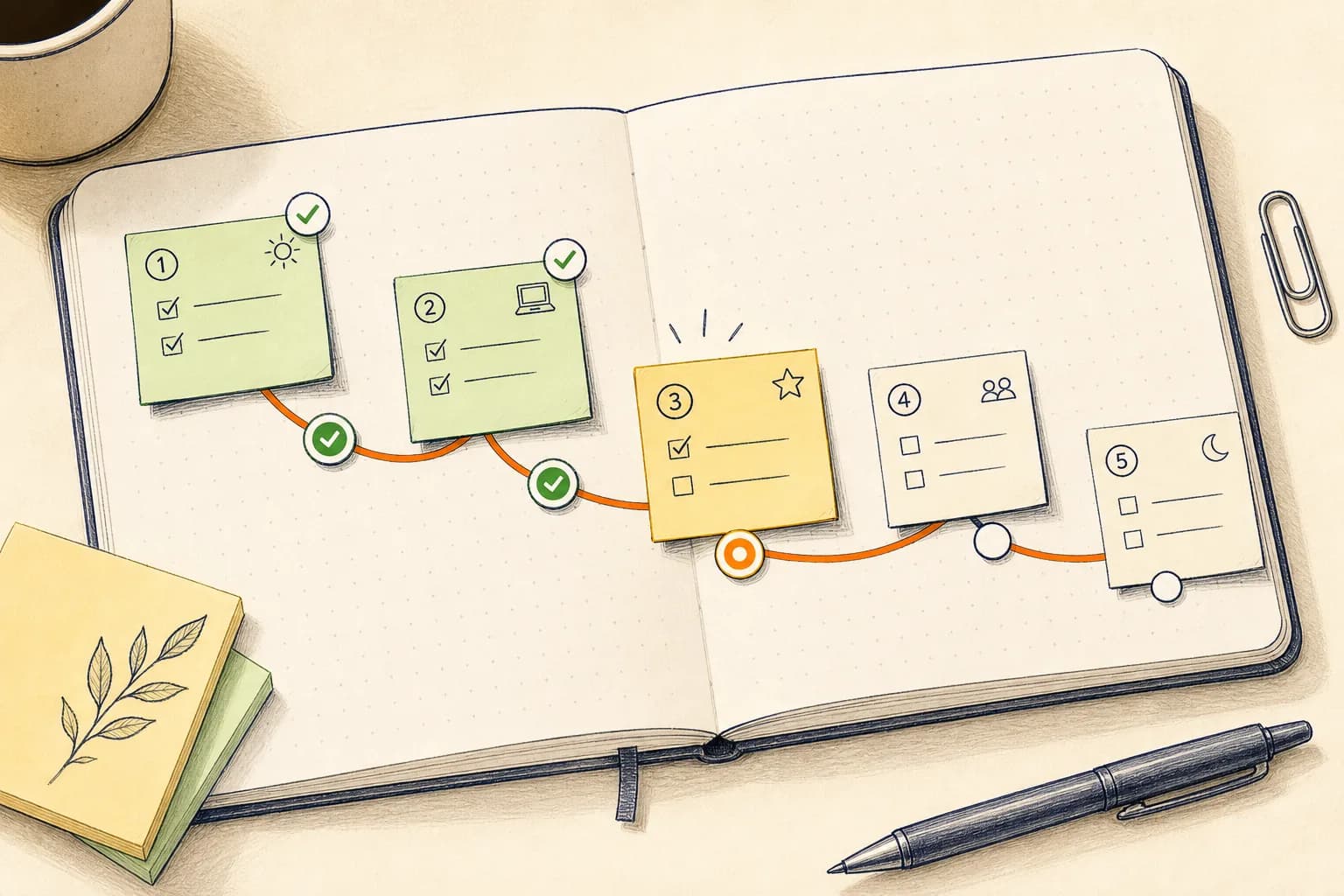
Map enough work to remove uncertainty, not enough to reproduce your full backlog. Include setup, review, and follow-up when they are real parts of the process. A route should remain readable at a glance.
Keep one note current
Mark the task you are doing now and let the route hold the remaining order. When work is completed, move the current state forward. If priorities change, rearrange the affected notes without discarding the progress already visible.
Close with tomorrow's first move
At the end of the day, review what moved and decide what unfinished work still matters. Rewrite one precise next action for tomorrow, then stop. A clean handoff is more valuable than automatically carrying every task forward.